
Interacting with elephants just might be the most sought-after tourism activity in Thailand, and we were no exception. Even before arriving, we knew that visiting and swimming with elephants in Thailand was at the top of our priority list.
While spending a month backpacking Thailand, we were lucky enough to spend a full day with 4 sweet elephants outside of Chiang Mai.
However, before, during, and after our elephant interaction, we were plagued with concerns that despite our attempts to follow our own ethics, we would end up in a situation where we contributed to the harm of these magnificent creatures.
Here’s how our time feeding, walking with, bathing, and swimming with elephants in Thailand went, and what questions we recommend asking yourself as you make your plans!
I’ve mostly preserved our original blog post here, but I have added a section below with our updated thoughts on bathing with elephants now that the experience is a bit further in the past for us.
Table of Contents
Our Experience Visiting + Bathing Elephants in Thailand
Our day spent among elephants in Chiang Mai was, from our perspective, absolutely magical. As I update this blog post years later, I can confirm that it remains one of our top travel experiences of all time!
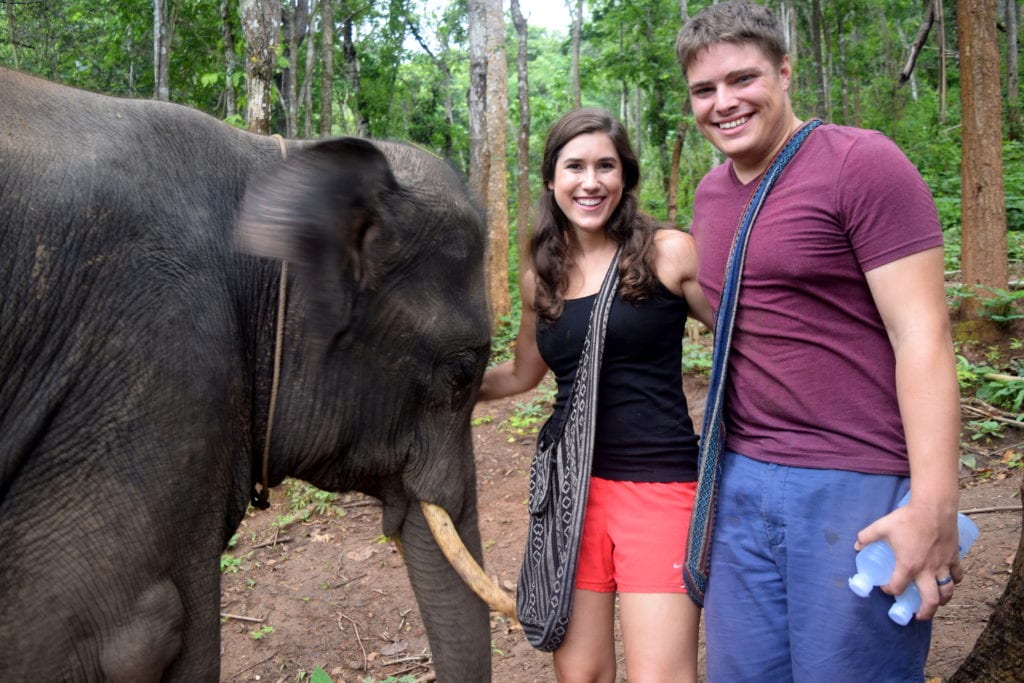
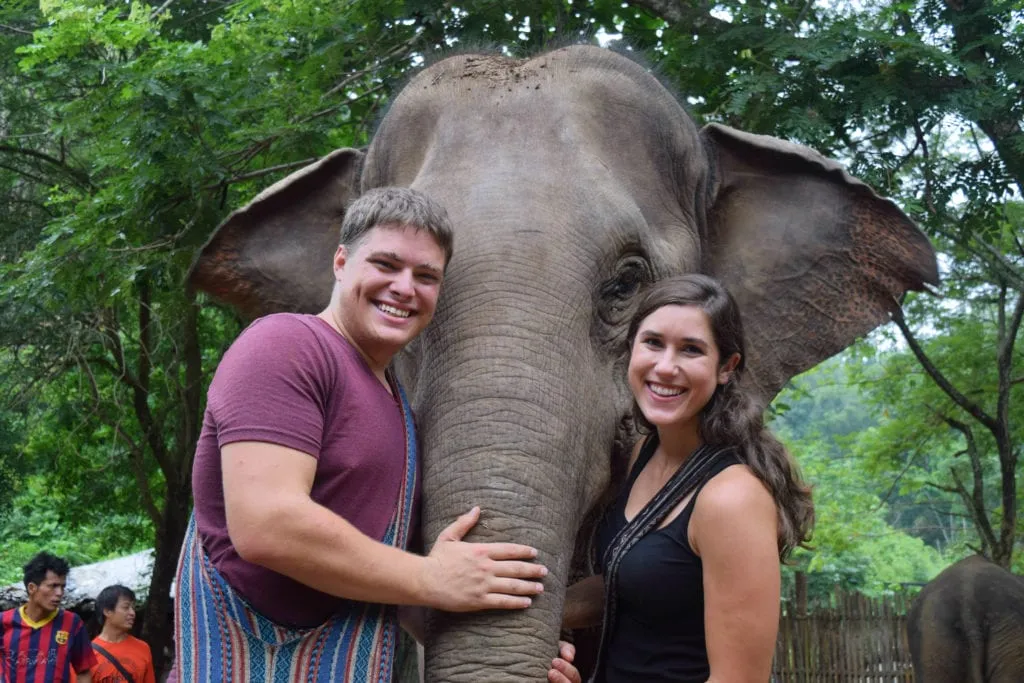
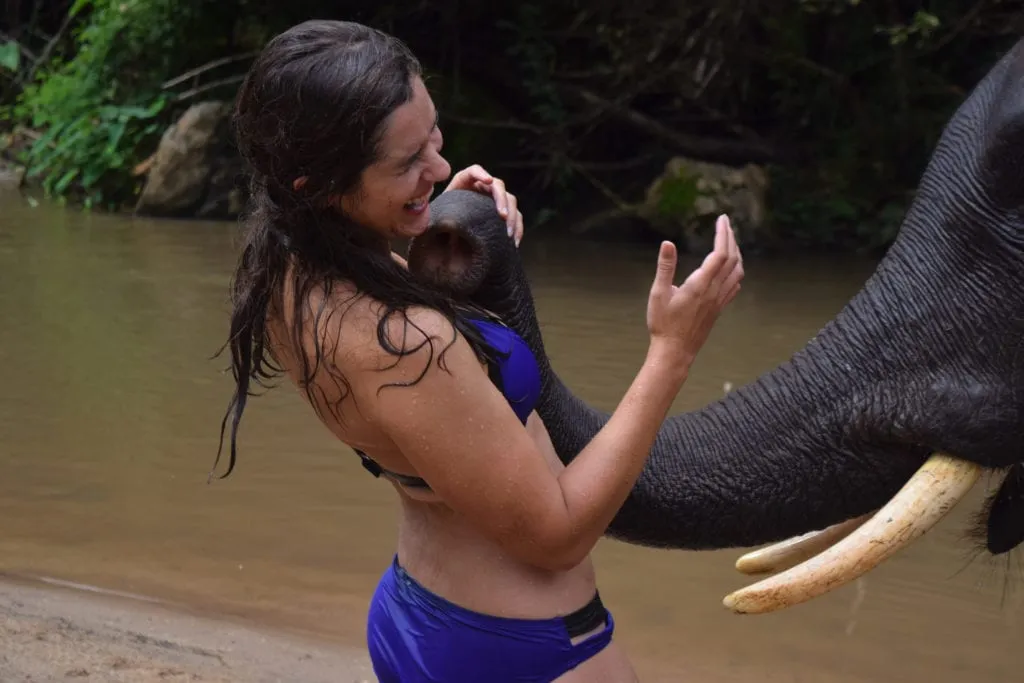
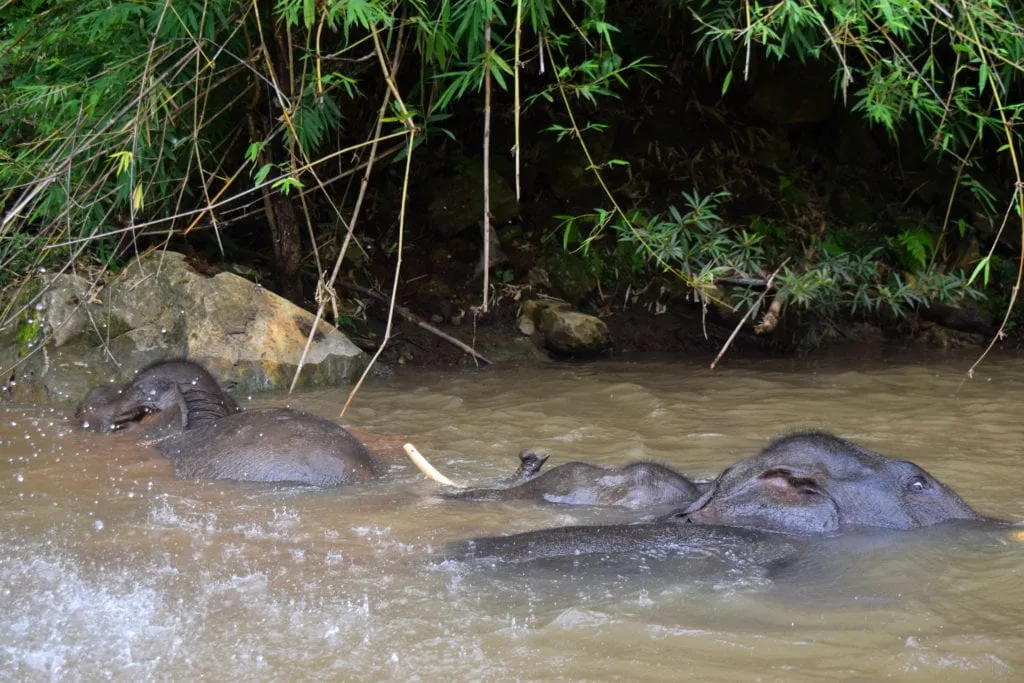
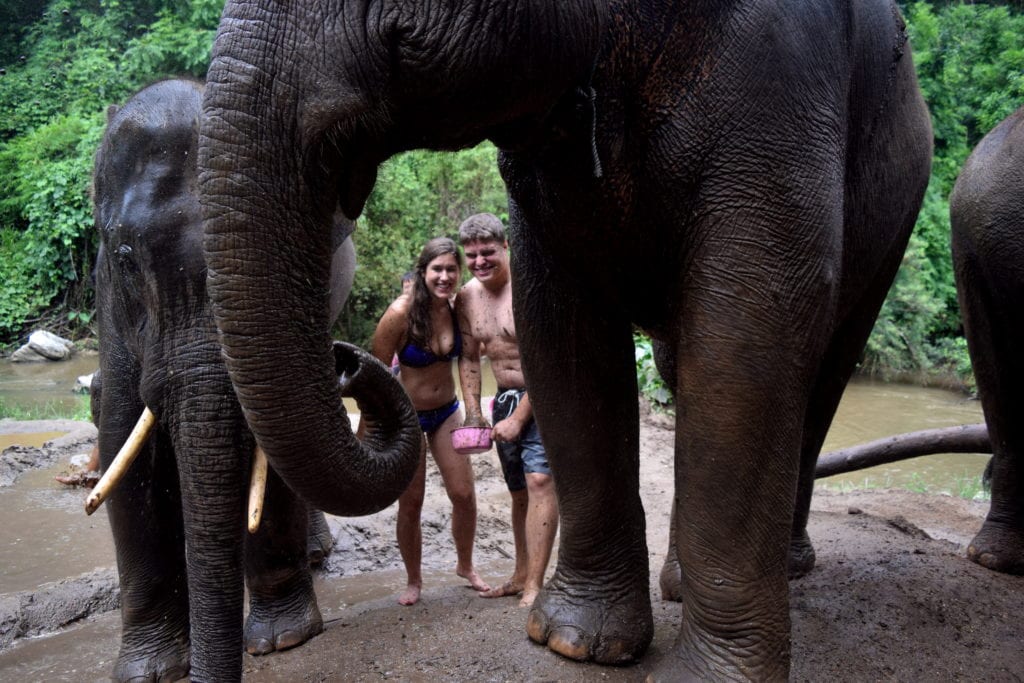
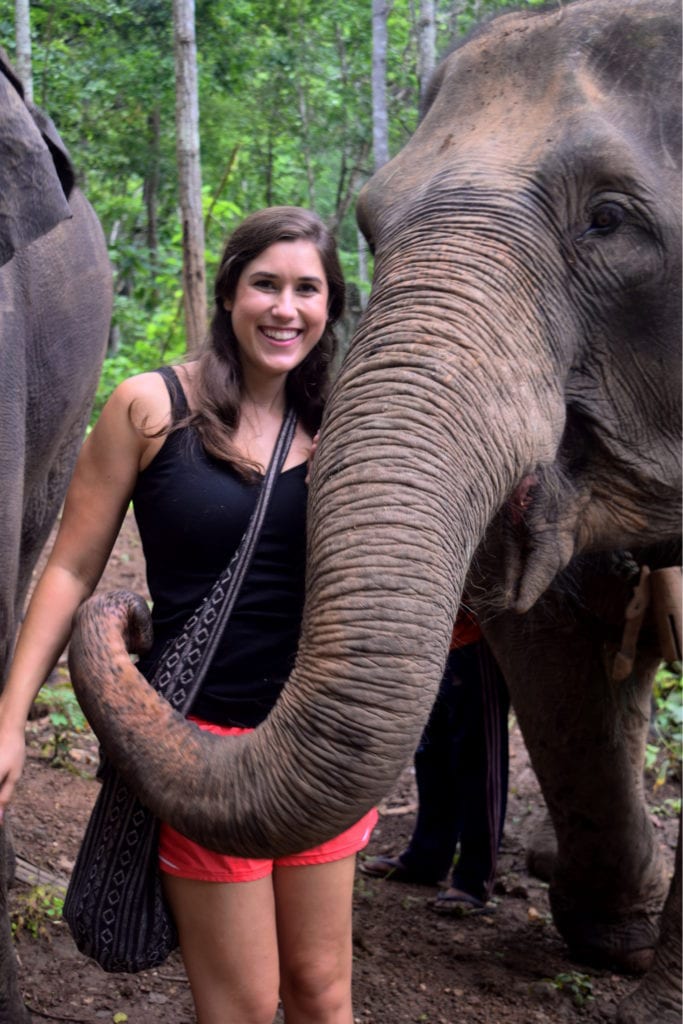
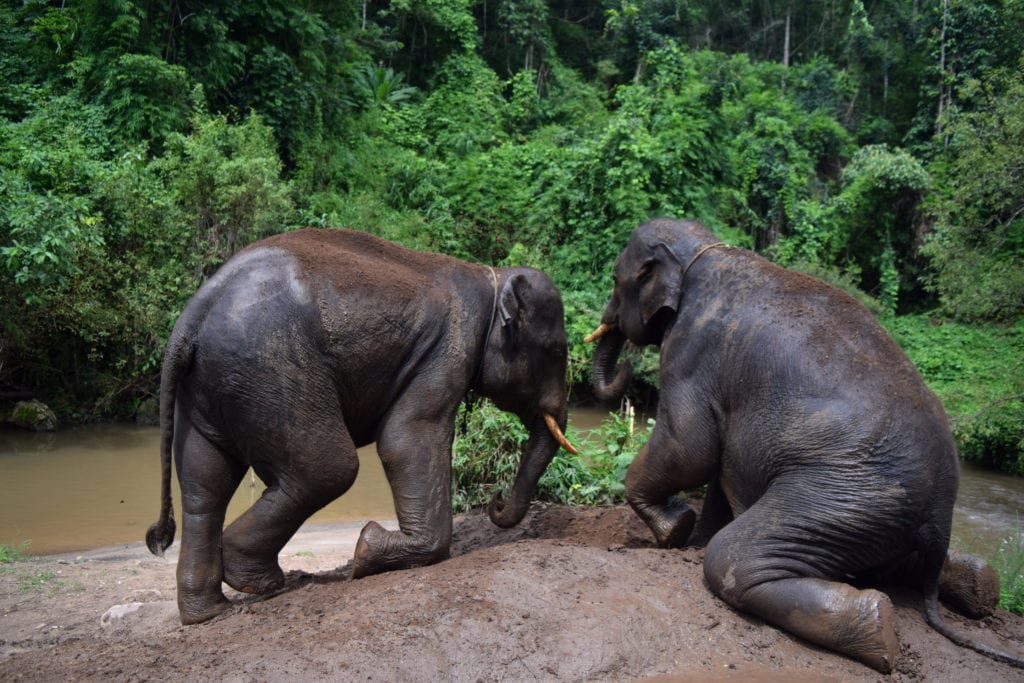
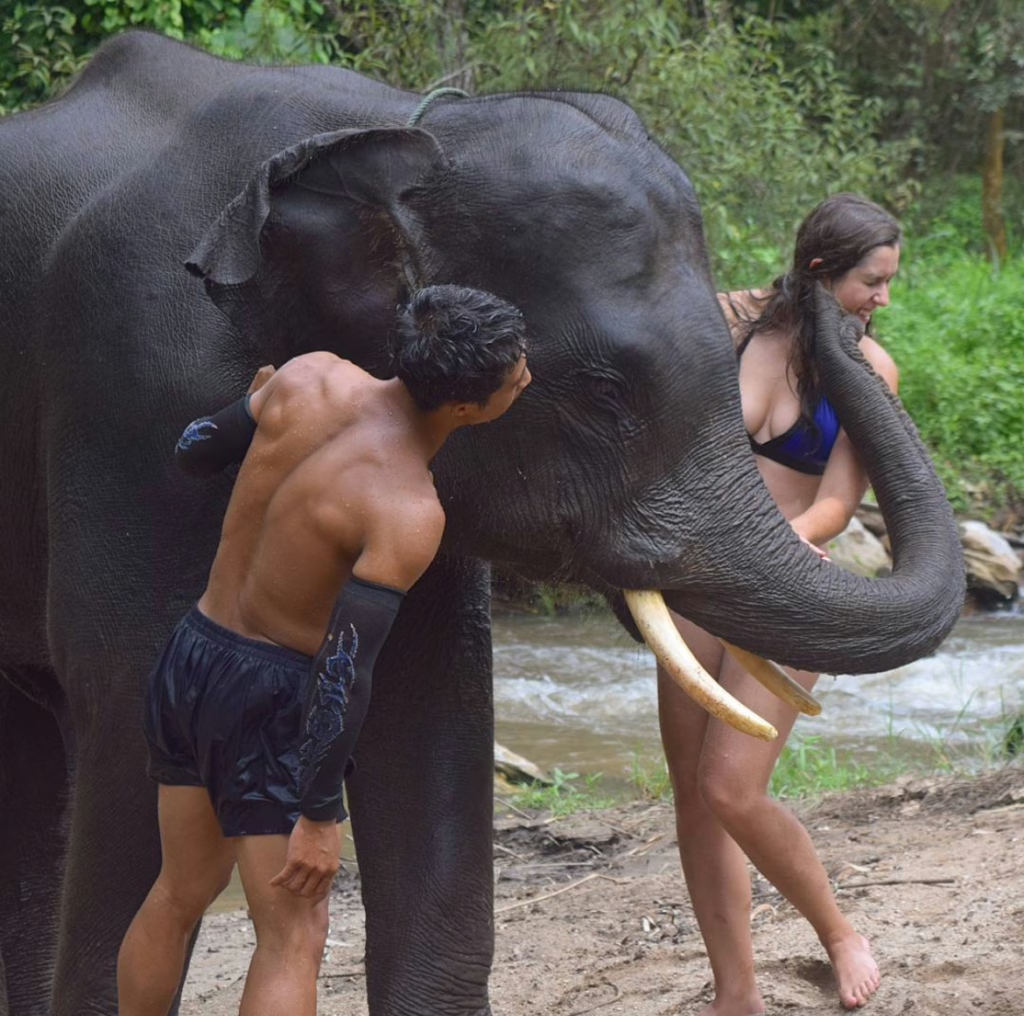
We didn’t ride these elephants, of course (and there’s no need for me to rehash why–there are tons of articles on the subject), but we did feed the elephants, walk with them through the jungle, hug them, pet them, and give them a “mud spa”, aka, swim with elephants in the river (or, more accurately, we swam, they laid down and enjoyed the cool water).
Through a combination of luck, traveling in the wet season, and choosing a location that tended to have small group sizes, Jeremy and I ended up on a private tour: just us, four elephants, and five guides.
We found the elephants that we were lucky enough to spend time with incredibly adorable, a little more intimidating than my animal-lover self anticipated, and wickedly smart.
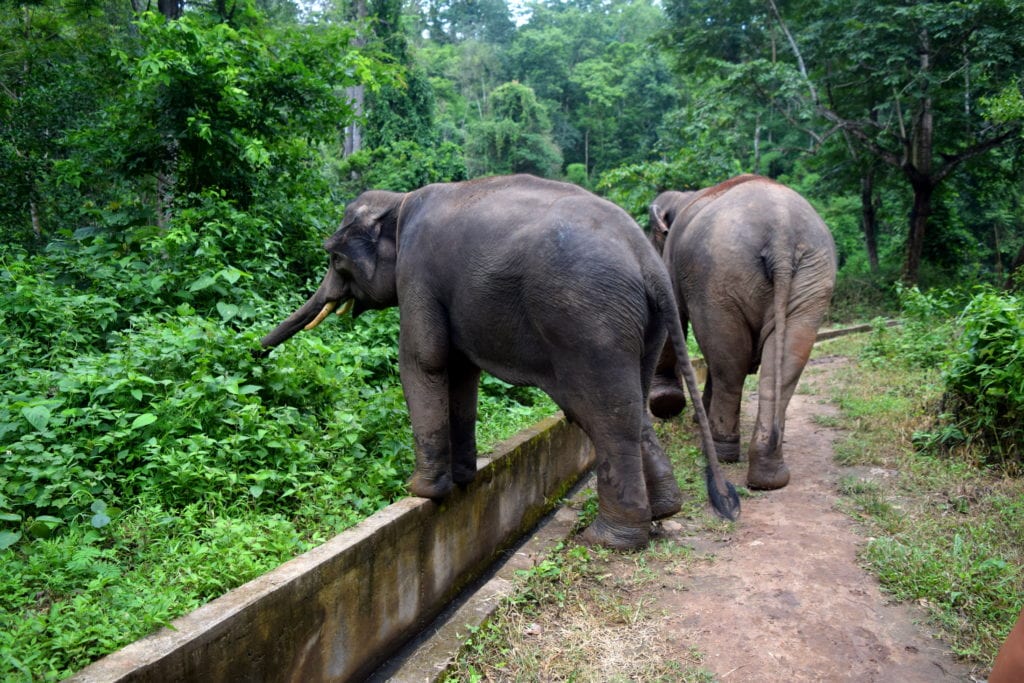
The elephants consisted of two mothers who each had a 7-8-year-old son–and oh my, was it ever easy to tell apart the rambunctious boys from the more steady, adult mothers. Their individual personalities were distinct and fascinating.
The day could not have gone better, and we had a very positive experience that we will never forget.
Essential Tips for Finding an Ethical Elephant Sanctuary
Unfortunately, not everyone is as lucky with their Thailand elephant experience.
Before arriving in Southeast Asia, we heard horror stories of chained and depressed elephants, locations that advertised “no riding” but actually did have tourists ride their elephants, and unethical sales practices.
When it comes to elephant tourism, Thailand has the good, the bad, and the ugly–here’s what we learned, and how to ensure that you also have a spectacular visit.
Think beyond the Elephant Nature Park.
Before arriving in Chiang Mai, I was under the impression that the well-known Elephant Nature Park was the best place to see elephants in Thailand.
I’m sure that it is a wonderful place, based on rave reviews from everyone who goes there.
It also requires planning ahead–it was booked up more than a week out for one-day experiences when we went to Chiang Mai, even though it was the wet season!
Given the interest that Thailand’s tourists have in elephants (and the money that they are willing to spend), it’s no surprise that there were offices for elephant parks and sanctuaries on every corner in Chiang Mai, and slick brochures with dozens of company names in every tourism office.
If you have your heart on bathing with elephants in Thailand, there are options!
Some options are better than others, but with research, there’s no reason to give up on interacting with elephants if you don’t reserve a spot in advance at the Elephant Nature Park.
Do your research.
Jeremy and I picked up pamphlets for several elephant tourism companies that advertised “no riding” tours… and then Googled them.
Some had great reviews, some had very few reviews, and some had bad reviews.
We nixed several places after learning that their elephants were available for riding despite advertising the opposite, or that the elephants appeared to be chained for most of the day.
Don’t rely on tourism offices to be honest about what they’re selling.
When overwhelmed with choice, Jeremy and I approached one of the tourism offices in Chiang Mai and told the woman working there what we were looking for. We showed her a company that we’d like to work with and asked if she could help us contact them.
The high-pressure sales tactics began immediately–the woman called someone on the phone from a different elephant company and tried to get us to set an appointment with them.
Uncomfortable, we asked about the program–it was riding, exactly what we said we didn’t want to do for ethical reasons.
The woman on the phone immediately switched tactics–“Oh, okay, we can do no riding for you!”
We skedaddled after that, completely uncomfortable with the entire interaction.
Don’t feel pressured to find an elephant sanctuary or company in advance.
Many of the smaller outfits we looked into didn’t have a website or even an email!
While I expect that there are new websites and pre-booking options popping up every day, there are many small elephant businesses that are still accessible only on the ground in Thailand.
Consider making an elephant experience a priority while in Chiang Mai.
If you want to interact with elephants during your trip, Chiang Mai is arguably the best place to see elephants in Thailand.
It has a huge concentration of elephant businesses to choose from and is the only place we saw during our trip to Southeast Asia that advertised plenty of “no riding” options.
Western tourists’ newfound ethics regarding elephant riding have changed the business model in Chiang Mai, but in Laos and Cambodia, elephant rides are still the expected and typical way to interact with elephants.
We didn’t see a single business in either of those countries that offered only “no riding” experiences.
Know that there is no guarantee.
When interacting with animals–especially exotic, privately owned animals in the developing world–the risk that the animal is being mistreated to access your money is always present, no matter how smooth the sales pitch or nice the facility.
Do I feel reasonably confident that the company we chose treated their elephants well?
Yes, I do–there were no chains that we saw, no spears, no violence administered, and the elephants were bright-eyed, playful, and appeared to be happy and healthy.
On the other hand, the animals approached us from the jungle, brought by their mahouts.
We never saw where they lived or slept, or what their lives were like at night when the tourists went home, and the more anxious part of my mind can’t help but wonder if there’s a reason for that.
Would we bathe with elephants in Thailand again?
As I update this blog post in 2026, I lean toward “no” when answering this question.
Many years and miles of travel removed from this experience, I absolutely cherish it for what it brought us as humans, but these days, we prioritize wildlife encounters that involve limited to no interaction with the animals.
The famous Elephant Nature Park seems to agree, as they have now phased out bathing with elephants.
I certainly think there’s much more room for nuance here than with, say, elephant riding or (drugged) tiger cub cuddling, two clearly unethical activities, but I personally would be hesitant to book a bathing with elephants experience again.
At the time, taking the mitigated risk that we would contribute to animal mistreatment was one that we deemed worth it, but I would be lying if I said that I didn’t feel uncertain about our choice then and now.
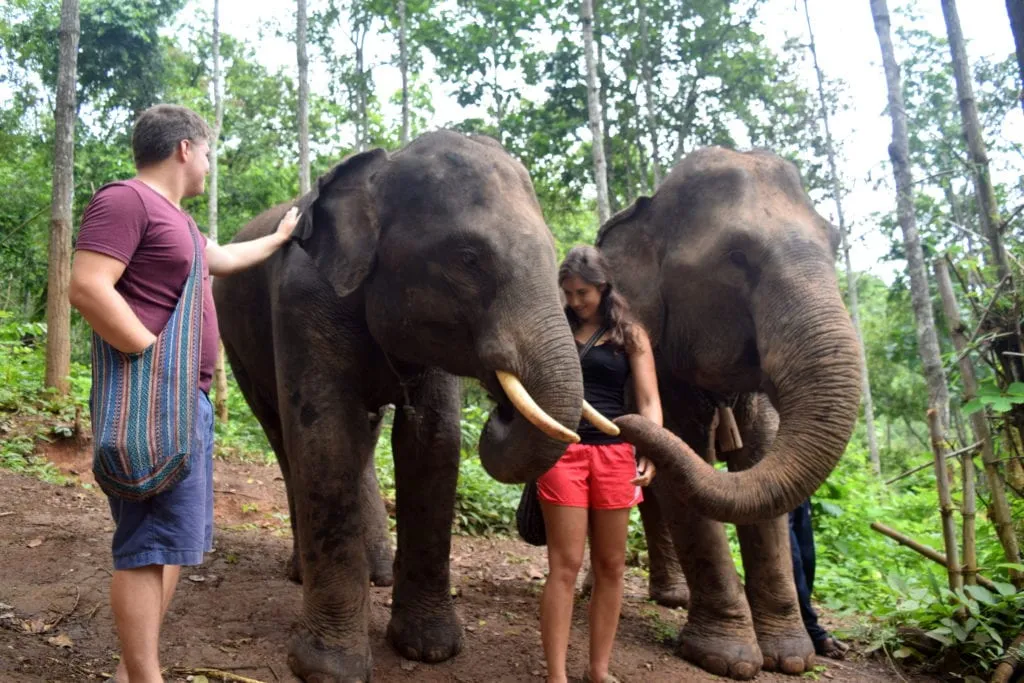
It certainly enriched our lives, but I doubt the elephants got much out of the day (other than a bunch of bamboo and a bath, but they could have had that without the gawking bipeds).
And, for human visitors, the risk of injury does haunt me a bit more now than it did then, which is probably a function of aging more than anything.
That being said, I can’t deny that at the time, we had a blast swimming with the elephants, and I won’t erase that experience from our travel blog at this point.
For us as humans, the experience was easily in the top five from our first time backpacking Southeast Asia, and the absolute highlight of our trip to Chiang Mai.
I will cherish the memories of hugging sweet elephants and watching them do ridiculous things like making mudslides into the river forever.
Where We Went Swimming With Elephants in Thailand
Where We Spent the Day With Elephants
Hug Elephant Sanctuary
We had an excellent experience with Hug Elephant Sanctuary.
Be prepared for an hour-long drive from Chiang Mai while riding in the back of a pickup truck on a freeway (likely the most dangerous thing we did in Southeast Asia). What’s waiting at the end is pretty spectacular!
Hug Elephant Sanctuary offers half-day and one-day experiences.
We opted for the one-day experience and were fully satisfied with the several hours that we spent with the elephants, the delicious lunch that the sanctuary served, and the attachment that the mahouts very obviously had to the elephants–their love for their big friends was abundantly clear.
Our experience feeding, playing, and swimming with elephants in Thailand was completely magical thanks in large part to their efforts, and we will cherish the memories for a lifetime!
Cost of Bathing Elephants in Thailand
During our trip, the listed going rate for a one-day, non-riding elephant experience in Chiang Mai appeared to be between 2000-3000 baht per person, or roughly $65-90.
This is consistent with the rate currently listed on Hug Elephant Sanctuary’s website.
As almost always in Southeast Asia, prices are negotiable.

Hi Kate – Just want to say I love your site and its design and your writing. I’m going to start traveling soon and blog about it, but since I’m an ecologist, I’d like to focus on sustainable travel. I know there are other travelers looking for this type of experience. If I create a Sustainable Travel board on Pinterest, I hope you’ll accept my invitation. Have fun and keep up the great work.
Hey Beth! Thank you, and good luck with your travels. Hope you have as much fun as we are. 🙂
Thanks for writing about this! It really does help generate awareness. It’s also good to hear that things seem to be moving towards no-riding in thailand. I was appalled by the mahut-courses being offered in Laos personally. I just hope that in Thailand the treatment of the elephants is improving behind the scenes too. And at those prices, it’s easy to see why elephant tourism is so important to the locals; my concern about any elephant interractions is are we contributing to increasing the number of animals in captivity. Like you say it can be really difficult to work out who the good guys are, so thanks for writing this.
I was definitely pleasantly surprised by how many no-riding options were available in Chiang Mai–but, since Thailand was our first stop, it left me even more uncomfortable with the state of things in Laos and Cambodia. I definitely agree that it’s hard to know who the good guys are, or even if you can count us elephant-gawking tourists among them. The subject is enormously complex when looked at from all angles!